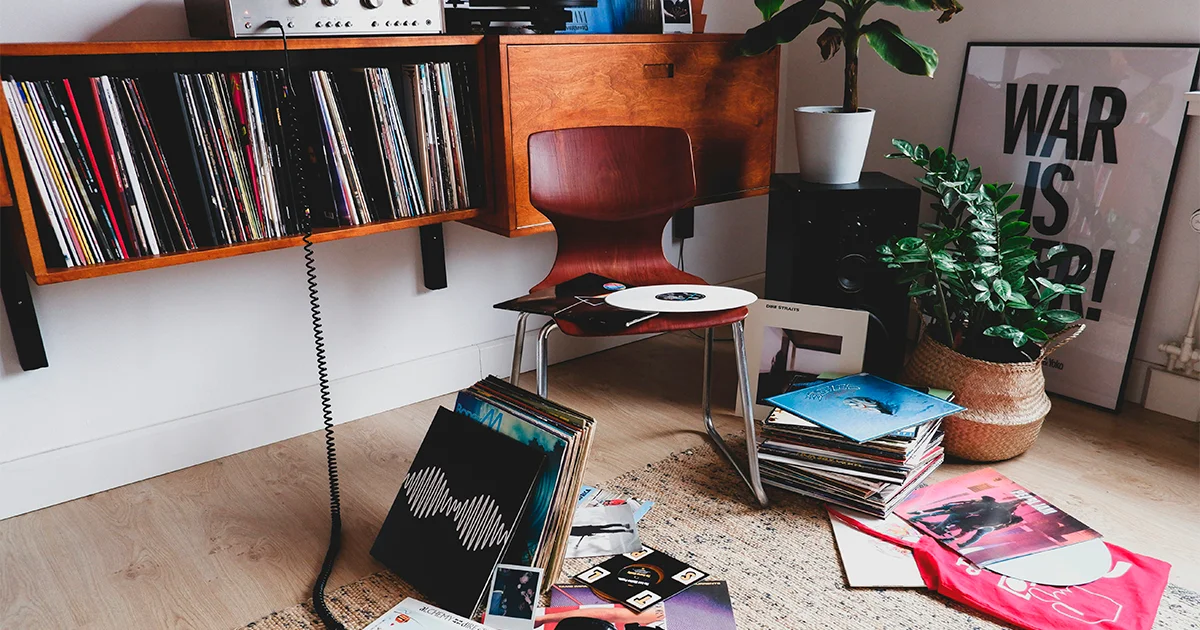
Techno Origins, Styles and Evolution in 2026
Like many influential Black American music genres, techno was born in Detroit. Built from the ground up on electronic instruments, it spread rapidly across Europe, the Americas, and even Japan. That swift global expansion fuelled the evolution of a musical culture that, decades later, shows no sign of slowing down.
The origins of Techno
Techno emerged in Detroit in the 1980s, driven by the "Belleville Three" — three friends: Kevin Saunderson, Derrick May, and Juan Atkins. Their sound was shaped in part by "Midnight Funk Association", a radio show hosted between 1977 and 1980 by a DJ known as "The Electrifying Mojo".
At its core, techno is a form of electronic music, most often produced in a studio or home studio environment, then brought to life by DJs across clubs and events. It is an instrumental genre built around electronic tools: keyboards, sequencers, synthesizers, drum machines, and more.
In its earliest form, techno drew heavily from futurist sounds — electro, funk, soul, and new wave. Artists like Daft Punk, Vitalic, and The Prodigy became reference points. By 1990, Detroit artists had built a massive following in Germany and the UK, cementing techno as a fully-fledged musical culture rather than just a genre.
How Techno evolved
From Detroit to Berlin, the culture moved fast. And no account of techno's origins is complete without Kraftwerk — the German group whose albums Autobahn (1974) and Trans Europe Express (1977) laid the foundations for what was to come. Over the years, techno became more than music: it offered its followers a way to process the anxieties of industrialisation, an uncertain future, and the social tensions that came with it.
In its early days, techno lived in the clubs, where DJs spun seemingly endless mixes deep into the night. Like disco before it, vinyl was the format of choice. It is worth noting, though, that techno owes far more to electro than to disco — a distinction that still causes confusion today.
With the rise of raves and free parties, techno caught the attention of the press and authorities alike. This gave ravers — known in French slang as teuffeurs — a platform to push back against the accusations of noise pollution and antisocial behaviour (drugs, alcohol, disorder) that were routinely levelled at the scene. Most of these events were underground by necessity, taking place outside the law and away from official venues.

Essential tracks & albums
- Jeff Mills - The Bells (1996)
- Daft Punk - Homework (1997)
- Vitalic - Poney EP (2001)
- Paul & Fritz Kalkbrenner - Sky and Sand (2008)
- Joris Delacroix - Time To Lose (2019)
The French Touch
Daft Punk (the name was reportedly coined as an insult by a British music critic after their first single, roughly translating to "daft" as in stupid or crazy) was a French duo formed in 1993 that fundamentally reshaped popular electronic music and the French electronic scene through 4 studio albums: Homework, Discovery, Human After All, and Random Access Memories. Beyond their core discography, they took on a string of landmark side projects: the Tron: Legacy soundtrack, the Alive concert films, and Daft Punk's Electroma, a film written and directed by Thomas Bangalter and Guy-Manuel de Homem-Christo themselves. They also produced a number of celebrated records for other artists, including Kavinsky's Nightcall and Sébastien Tellier's Sexuality.
Through the 1990s, the world began talking about French Touch, a sound built on heavy funk and disco sampling, with key figures including Etienne de Crécy, Cassius, Air, Justice, Kavinsky, Sebastian, DJ Mehdi, and Mr. Oizo.
What made Daft Punk truly iconic was their instantly recognisable sonic identity. In their early days the sound was raw and saturated, giving Homework in particular a gritty, unpolished character. Later records introduced the vocoder and talkbox, signature textures that made their tracks identifiable within seconds. Their chord progressions always carried complexity, and the disco influence never left. Their final album Random Access Memories managed to preserve that identity while achieving a new peak in production craft: sampling was abandoned entirely in favour of world-class live musicians on bass, drums, and guitar.
There's a Daft Punk track you might not know: Horizon, released exclusively as a Japan-only bonus track, is well worth tracking down online.
The Techno Scene in 2026
In 2025 and 2026, the Techno scene is undergoing a sharp return to its roots. A growing fusion is taking hold between club Techno and the raw energy of Hardtek and underground Tekno.
Driven by a new generation of producers, this hybrid movement is putting vinyl back at the centre of the conversation. Far from being a nostalgia play, the record has become the format of choice for anyone chasing an honest, uncompromising sound.
At Vinylbleu, this shift sits at the heart of our selection: we champion that bridge between genres where Techno meets the relentless force of Hardtek kicks.
Discover our playlists spanning Old School & New School — the best of what's out there



Techno: the current scene
Techno has come a long way, and countless sub-genres have branched off along the way. But no conversation about the current scene is complete without mentioning Drumcode Records. Since the label pressed its first record in 1996, it has been home to genuine icons of Swedish techno, including Ida Engberg, Cari Lekebush, and Joel Mull.
Drumcode also brought Belgian artist Amelie Lens into its orbit, one of the most compelling names in contemporary techno. Many draw comparisons between her and fellow Belgian Charlotte de Witte. Her album Exhale introduced this former model turned DJ to a wider audience, and she has since carved out a distinctive style with tracks like Resonance and Contradiction. Today she runs two labels of her own: Lenske and Exhale.
Paul Kalkbrenner is another artist who has left a deep mark on modern techno. The German producer and DJ has a sound that sits entirely in its own lane. In 2008 he played the lead role of a DJ in the film Berlin Calling, and the accompanying soundtrack album went gold on the strength of Sky and Sand. He went on to perform at major international festivals behind albums Icke Wieder (2011) and Guten Tag (2012), with his most recent EP Speak Up dropping in 2020.
Festivals, Techno Warehouses & Techno Parade
The first "Techno Parade" was held in September 1997, organised by a group of party-goers in partnership with Radio FG. Around 400 people took to the streets of Paris for that inaugural march. The first official edition of the Techno Parade, however, took place in 1998, organised by the association Technopol with the backing of former French Minister of Culture Jack Lang.
Since then, the event has taken place every year as part of Paris Electronic Week, falling on the second Saturday of September. Attendance has grown to hundreds of thousands: the 21st edition in 2019 drew around 300,000 people, a testament to just how far techno has travelled since its origins in the 1980s.

🎧 Spotlight: Numéro Bleu
Dive into the techno and hardtek world of Numéro Bleu, an artist straddling the raw energy of free parties and broader electronic influences.
Discover the artistFAQ — Techno and its evolution, in 3 questions
What is the difference between Techno and Hardtek? ↓
Classic Techno typically runs between 120 and 130 BPM, built on hypnotic, repetitive structures. Hardtek pushes the tempo much further (145–160 BPM), with a far heavier kick and an energy rooted directly in the Free Party movement and the Freetekno underground.
Why does vinyl remain unbeatable in 2026? ↓
Beyond the warmth and analogue depth of the format, vinyl is the only medium that delivers real physical dynamics through a sound system. In 2026, buying a record is also an act of resistance against an all-digital world: owning the object means directly supporting the artist and the independent label behind it.
Where can I listen to the latest picks from Vinylbleu? ↓
We keep our official playlists on Spotify, Deezer, and YouTube regularly updated with tracks that have been road-tested and approved. It's the best way to stay ahead of the latest Hardtek, Tekno, and Techno releases before hunting down the physical versions in our record crates.