Tribe vs Hardtek
Tribe and Hardtek share the same free party roots, yet they differ in tempo, structure, and overall vibe. Here's a quick breakdown to help you tell them apart—whether you're on the dancefloor or digging through your vinyl collection.
Hardtek is often seen as a broader genre born from free parties and teknivals, encompassing a wide range of subgenres like Tribe, Acidcore, Pumping, and more.
On the same vinyl record, an artist might deliver one track clearly rooted in Tribe and another leaning heavily into Hardtek. The line between the two can be blurry, and classification is often subjective. At the end of the day, does everything really need a label? Isn't it all about enjoying the music?
You've probably heard both terms during the same night, sometimes used to describe exactly the same sound. Still, Tribe and Hardtek do have distinct characteristics, each with its own codes and identity. The confusion is common—and understandable—since they come from the same culture. The goal here is simple: give you the nuances you need to understand and differentiate these two styles, whether you're a DJ, vinyl collector, or just a dancefloor enthusiast.
Tribe traces its roots back to the 90s and is known for a more mental, progressive, and hypnotic approach compared to Hardtek.
Key Hardtek & Tribe artists include: Fky, Crystal Distortion, 69db, Heretik, Okupe, Narkotek, and many more.
Why Tribe and Hardtek Are Often Confused
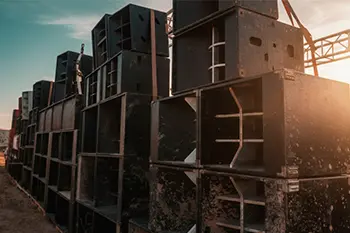
The confusion mainly comes from their shared origins. Both styles emerged from the same environment: the European free party movement of the 90s, with traveling sound systems, abandoned warehouses, and remote outdoor locations. On the dancefloor, they often coexist during the same night, played by the same crews, for the same crowd.
There's also a fluid vocabulary at play. Within the scene, terms like “tekno,” “tribe,” and “hardtek” are frequently used interchangeably—especially by those who weren't around for the original distinctions. As a result, many people listen to Tribe without realizing it, or think they're playing Hardtek while actually riding a tribal groove.
The truth is, the differences are real—but subtle. You can feel them physically on the dancefloor, but also hear them through a more technical analysis of the sound. Let's break it down.
Origins and Evolution of Both Styles
The Birth of Tribe
Tribe (also known as Tribal Tek or Tribal Tekno) emerged in the late 90s, at the heart of French free parties and the wider European underground scene. It draws heavy inspiration from tribal music: repetitive percussion, hypnotic loops, trippy atmospheres, and trance-like states. All of this blends with industrial tekno to create a sound designed for long journeys, pulling the listener into a deep mental space.
Early Tribe producers aimed for something more organic—almost shamanic. The kicks tend to feel rounder, the textures warmer, giving the music a very different breathing space compared to purely mechanical tekno.
Its most introspective form, Mental Tribe, pushes this even further with spiraling effects, extended delays, and darker atmospheres.
📖 To dive deeper into the history of the free party movement and underground tekno culture, check out our dedicated article.
The Rise of Hardtek
Hardtek emerged as a more direct and aggressive response. It developed in the early 2000s by pushing every parameter further: higher BPMs, sharper kicks, heavier basslines, and an overall more intense energy. Where Tribe focuses on trance, Hardtek is all about impact.
It draws influences from both European hardcore and tekno, quickly becoming a cornerstone of the alternative scene. In countries like France, Germany, and the Czech Republic, Hardtek established itself as a go-to sound for the most intense free parties.
Dancefloor Vibe & Energy
On the dancefloor, Tribe creates a collective trance. Bodies move fluidly, almost unconsciously, locked into hypnotic grooves. It's often described as an inner journey—perfect for those long, late-night sessions when time seems to dissolve.
Hardtek, on the other hand, does the opposite: it awakens, drives, and electrifies. It hits during peak time, when the sound system is pushed to its limits and the dancefloor transforms into one massive, high-energy organism.
Tribe & Hardtek Vinyl Picks You Need to Hear
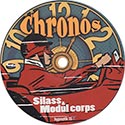
🎧 Tribe Vinyl Selection
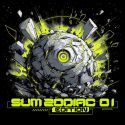
🎧 Hardtek Vinyl Selection

Tribe vs Hardtek: Side-by-Side Comparison
| Criteria | Tribe | Hardtek |
|---|---|---|
| BPM | 150–160 BPM | 160–185 BPM |
| Groove | Organic, hypnotic, flowing | Powerful, linear, straight to the point |
| Kick | Round, warm, percussive | Sharp, hard, punchy |
| Atmosphere | Trance-driven, immersive, mental | Raw energy, physical impact |
| Best Use | Long DJ sets, gradual progression | Peak-time sets, high-intensity drops |
FAQ – Tribe vs Hardtek
What is the main difference between Tribe and Hardtek? ↓
The key difference lies in musical intention. Tribe aims for trance—it's hypnotic, organic, and designed to take the listener into a deeper mental state. Hardtek focuses on impact—it's direct, aggressive, and built to trigger an immediate physical reaction on the dancefloor. Same roots, same scene, but two very different ways to experience the music.
Is Tribe slower than Hardtek? ↓
Generally, yes. Tribe typically sits between 150 and 160 BPM, while Hardtek ranges from 160 up to 185 BPM. But slower doesn't mean weaker. Tribe compensates with a deeper groove and more hypnotic sound design. It's a different path to intensity—not a lesser one.
Are Tribe and Hardtek the same as Tekno? ↓
Not exactly. Tekno is the umbrella term covering the entire underground free party sound: Tribe, Hardtek, industrial tekno, Acidcore, and more. Tribe and Hardtek are two distinct branches of Tekno, each with its own sonic identity. Think of it like rock music—different subgenres, same family.
Can you mix Tribe and Hardtek in the same DJ set? ↓
Absolutely—and many experienced DJs do. The key is managing transitions carefully. Differences in BPM and groove require precise mixing and pitch control to maintain flow. A common approach is to start with Tribe to build a hypnotic atmosphere, then gradually shift into Hardtek to push energy levels at peak time. A proven formula on the dancefloor.

Artist Spotlight: Numéro Bleu
Dive into the techno and hardtek universe of Numéro Bleu, an artist blending free party influences with modern studio production.
Discover the artistConclusion: Tribe or Hardtek—Do You Really Have to Choose?
In reality, it's hard to strictly categorize these two styles. The boundaries are fluid, influences constantly overlap, and many artists move naturally between Tribe and Hardtek within the same set or even the same vinyl release.
What truly matters is musical coherence, respecting the energy of the moment, and above all—enjoying the music. Whether you lean toward hypnotic and mental or raw and high-energy, the tekno scene thrives on its diversity. And that's exactly what keeps it alive.